Tuesday, September 28, 2010

Backyard strikes again!

A couple of photo sessions in the backyard by the storm water retention pond this morning yielded some nice captures. As a clear sign of fall and the trailing edge of warbler migration, the first Yellow-rumped Warbler of the season showed off its fresh but drab basic plumage. The Cape May migration radar forcast predicts a massive flight this upcoming weekend, so if you want to enjoy the warblers while they are still around do it now!! And for my European friends - keep your eyes and ears peeled as more Ne-arctic vagrants are heading your way!!

As usual - click on images to enlarge:o)

First-year male Magnolia Warbler:
 Adult female Common Yellowthroat:
 First-year male Black-throated Green Warbler:
 First-year male Yellow-rumped Warbler
 First-year female Northern Parula:

Sunday, September 26, 2010

Cromwell Valley Park Sunday 9/26/10

As the rain cleared this afternoon I decided to go birding at Cromwell Valley Park and look for the elusive Connecticut Warbler still missing from my life list. Just as I got there a birder couple pointed out a Northern Waterthrush feeding along the creek. I hunkered down next to the water's edge and watched the waterthrush slowly walking towards me flicking leaves over and picking maggots and leaches hiding underneath. While I was sitting there, an American Redstart, Magnolia Warbler, Black-throated Green Warbler, Yellow-rumped Warblers and Common Yellowthroats were flitting around in the bushes by the water. The surrounding trees were busy with Downy Woodpeckers, Red-bellied Woodpeckers, Northern Flickers, Yellow-bellied Sapsuckers and American Robins, Brown Thrasher and Gray catbirds came down to drink and bath in the creek.

Northern Waterthrush:
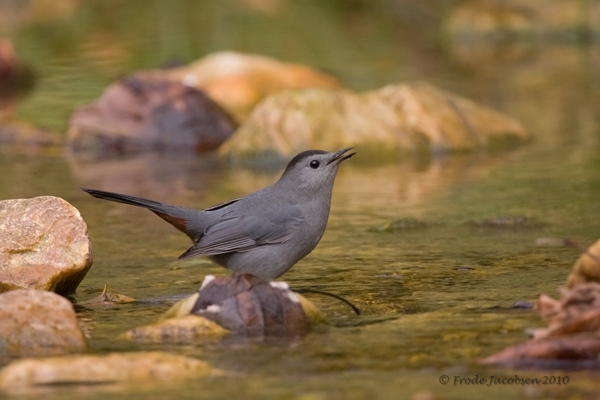
 Gray Catbird:

The rest of the afternoon was spent birding the Minebank Trail and I added another Northern Waterthrush, 4 Palm Warblers, 2 Nashville Warblers, a male Black-throated Blue Warbler, a stunningly bright Tennessee Warbler, 2 Rose-breasted Grosbeaks, Marsh Wren and 2 Lincoln's Sparrows.

Rose-breasted Grosbeak:
Magnolia Warbler:
 Tennessee Warbler:

Saturday, September 25, 2010

Camping on Assateague Island is fun!

I somehow persuaded Mary to get up at 3:00am last Saturday "morning" and drive out to Assateague Island in time to witness the morning flight at Bayside. We arrived just in time around dawn and the herons and egrets were already heading out from their off-shore roosts in large numbers to the feeding grounds in the saltmarshes; Great Egrets, Snowy Egrets, Little Blue Herons and Tricolored Herons all intermixed. As the sun rose the songbirds starting moving and the air filled with the flight calls of a variety of warblers. Many went unidentified darting across the skies as they made the jump from the island over to the mainland, but some distinct species were relatively easy to pick out based on their coloration or calls; Northern Parula, American Redstart, Yellow Warbler, Magnolia Warbler, Black-throated Blue Warbler, Black-throated Green Warbler, Palm Warbler, Blackpoll Warbler, Black-and-white Warbler, and Northern Waterthrush. Flocks of Brown Thrashers, Cedar Waxwings, American Robins, Northern Flickers, Starlings were also on the move, and two DICKCISSELS migrated overhead.
One of many Yellow Warblers seen this morning:
 One of several flocks of Brown Pelicans passing by over the bay:
 Adult winter Forster's Tern:
 Adult winter Laughing Gull:

As the morning flight ebbed out, we headed back to the mainland and Ocean City for some yummie breakfast and fresh coffee. We then proceeded north in search of "grasspipers" at the Murray Sod Farm in northernmost Worcester county. After checking about a dozen green sod fields we came upon a newly harvested field that hosted no less than eight BUFF-BREASTED SANDPIPERS, five Pectoral Sandpipers, and three Semipalmated Plovers.

We were lucky and managed to book the last available campsite at the Assateague Island National Seashore online the night before, so after a successful piper hunt we returned to Assateague Is. and checked in at the Ranger Station. With our tent up and camp set I explored the campground and the surrounding saltmarshes while Mary went for a run.
My wonderful birder babe Mary!
The pups are getting used to the idea of camping. Scarlett quickly learned that the mosquitoes were much less bothersome off the ground.
 Walker had a harder time with the bugs and had to seek refuge in the tent long before sunset.
One of about two dozen Caspian Terns roosting in the salmarshes:
Juvenile Little Blue Heron:
 A very cooperative Nashville Warbler:
Juvenile Tricolored Heron:
While enjoying a great evening in front of the campfire (except for the annoying mosquitoes!) we watched a Chuck-will's-widow hawking insects between the tree tops. At one point it landed on a vertical snag and perched with its head pointing straight up for about 15 minutes. A pair of Great Horned Owls serenaded us through the night and in the wee hours of the night many shorebirds could be heard migrating south. In the morning hours before breaking camp I added more great birds like Baltimore Oriole, Bobolink, Blue Grosbeak, Rose-breasted Grosbeak, and Red-breasted Nuthatch.

Adult winter Royal Tern:
 Juvenile Osprey:
 Yellow Warbler:
 Blackpoll Warbler:

We'll be back as soon as the weather cools down!

Wednesday, September 15, 2010

Backyard warbler bonanza!

Every afternoon this week I have spent a few minutes "pishing" and playing Screech-Owl song in attempts to attract birds at the back of our yard, but to little avail. Until today! The cool NW winds produced a major warbler flight down the mid-Atlantic region overnight and within seconds of starting the playback this afternoon I realized the woods behind our house was dripping with birds! The dead pine tree at the back of our property was at one point packed with birds, and although I was busy photographing I counted at least 3 American Redstarts, 2 Chestnut-sided Warblers, 2 Northern Parulas, 1 Magnolia Warbler, 3 Black-throated Green Warblers, 1 Eastern Wood-pewee, several Carolina Chickadees, Titmice, Cardinals and Catbird. Within minutes I had nearly filled a 4 Gb flashcard:o)

Adult male American Redstart:
 Juvenile female American Redstart:
Adult  male Black-throated Green Warbler:
Juvenile male Black-throated Green Warbler:
Juvenile male Chestnut-sided Warbler (red flanks not visible):
Male Magnolia Warbler:
Juvenile male Northern Parula:

Man I love migration!

Monday, September 13, 2010

Vireos - a warbler's best friends

As if a mixed flock of fall warblers is not confusing enough, they are often accompanied by a mixed variety of vireos in addition to the ever present chickadees (whose alarm calls often help draw the attention of warblers!). Vireos are specialized at gleaning caterpillars from leaves with their strong hooked bills. During our stay in Canada last week, I encountered all five expected vireo species. The Red-eyed Vireo was by far the most numerous (perhaps the most abundant forest bird in eastern US and Canada), followed by Philadelphia Vireo (replaces Red-eyed Vireo in parts of NE Canada), Blue-headed Vireo (by far the prettiest vireo!), a few Yellow-throated Vireos near Kingston (of which one was singing all morning), and finally one singing Warbling Vireo near Kingston.

Red-eyed Vireo (above and below):


Philadelphia Vireo (above and below):

Blue-headed Vireo (above and below):

Sunday, September 12, 2010

Fall = Warbler Fest!

Mary and I just returned from a week long visit to Quebec and Ontario and boy were the woods hopping with birds up there! Most of the time was spent around a friend's cabin in Chelsea outside Gatineau, QC. Magnolia Warbler, Chestnut-sided Warbler, Black-throated Green Warbler, Blackburnian Warbler, Nashville Warbler, American Redstart, Northern Parula and Black-and-White Warbler were everywhere. Gatineau Provincial Park next door added Yellow-rumped Warbler, Wilson's Warbler, Common Yellowthroat, Cape May Warbler, and Palm Warbler to the list. Towards the end of the week Blackpoll Warblers started increasing in numbers and a fall-out during a heavy rain storm brought a rather late Canada Warbler foraging low in the trees outside the cabin. A two-day visit to our old turfs around the Kingston area in Ontario added Tennessee Warbler and Ovenbird.
 Male Black-and-White Warbler (above) and a first-year male Northern Parula (below):
Female Black-throated Green Warbler:
 First-year Nashville Warbler:
Female Magnolia Warbler:
First-year male Chestnut-sided Warbler:
Male Wilson's Warbler:
Female American Redstart:
Blackpoll Warbler:
First-year Blackburnian Warbler:
Ovenbird:

Can't wait for them to pass through Maryland on their way south! PS. as always pictures can be enlarged by clicking on the thumbnails:o)

Tuesday, July 13, 2010

Oregon birding Day VI: Saving the best for last!

To get the most out of my last day of birding before returning to Portland in time for the Evolution Meetings, I got up at the crack of dawn and headed to Robert W. Sawyer State Park located along the Deschutes River in Bend. I was hoping for Canyon Wren, Dipper, and Pygmy Nuthatch, but settled for the last one. In return, I added Anna's Hummingbird and Bushtit to the bird list.
Pygmy Nuthatch (above) and Bushtit (below):

The ever-present Golden-mantled Ground Squirrel (above) and California Quail (below):

The main objective for today was to explore the unique canyons at Smith Rock State Park a few miles north of Bend, near the town of Terrebonne. This park is renowned for its nesting Golden Eagles, White-throated Swifts, Canyon Wrens, and possibly Swainson's or Ferruginous Hawks (check out their website: http://www.oregonstateparks.org/park_51.php). Unfortunately, the eagles had already fledged but their massive twig nests were visible from far away.

At the trail head parking lot I was greeted by a family of Black-billed Magpies (above), and as I hiked down the canyon towards the Crooked River this gorgeous male Bullock's Oriole (below) kept showing himself off. He joined his mate in some willows growing along the river where I suspect they had a nest.


The air above the canyon was filled with White-throated Swifts (above) and Violet-green Swallows (below):

Along the steep cliffs and boulders lining the canyon, I saw and heard many Rock Wrens (above) and my lifer Canyon Wren. Unfortunately, I was so perplexed when the Canyon Wren popped up between the rocks in front of me that I lost the photo op before it disappeared.
On the flats along the river bends I came across a family of Lazuli Buntings (below):
Frequent scanning of rocks in the river finally yielded a pair of American Dippers:
During my six day trip I didn't come across any snakes, but this lizard was very common at Smith Rock. The males had a brilliant blue throat patch seen in this photo.

After an extremely productive morning I decided it was time to wrap up my birding adventure. I took the scenic route along hwy. 26 past Warm Springs and Mt. Hood and had the car dropped off at the Airport by early afternoon. That gave me a couple of hours to relax at my home for the next five nights, the hip Jupiter Hotel before walking over to the Oregon Convention Center to register for the Evolution Meetings. I could easily have spent six days at any one of the wonderful sites visited... The west always leaves me wanting more!!